How to make spreadsheet pixel art
- Add a picture. Upload a photo or drawing, drop it on the preview, paste it, take a photo on your phone, or pick one of the 10 starter templates.
- Choose the grid width and colors. Grid width is the number of cells across; the height follows your picture. Fewer colors give bolder art.
- Choose what to make. The switch above the buttons has three modes: Pixel art (colored cells for Google Sheets or Excel), Mystery (a picture students reveal by answering questions) and Worksheet (a printable color-by-number sheet).
- Copy, download or print. In Pixel art, click Copy for Google Sheets and paste into cell A1 of a blank sheet, or Download Excel file for a ready-made .xlsx with square cells. In Mystery, click Download mystery file; in Worksheet, click Print worksheet.
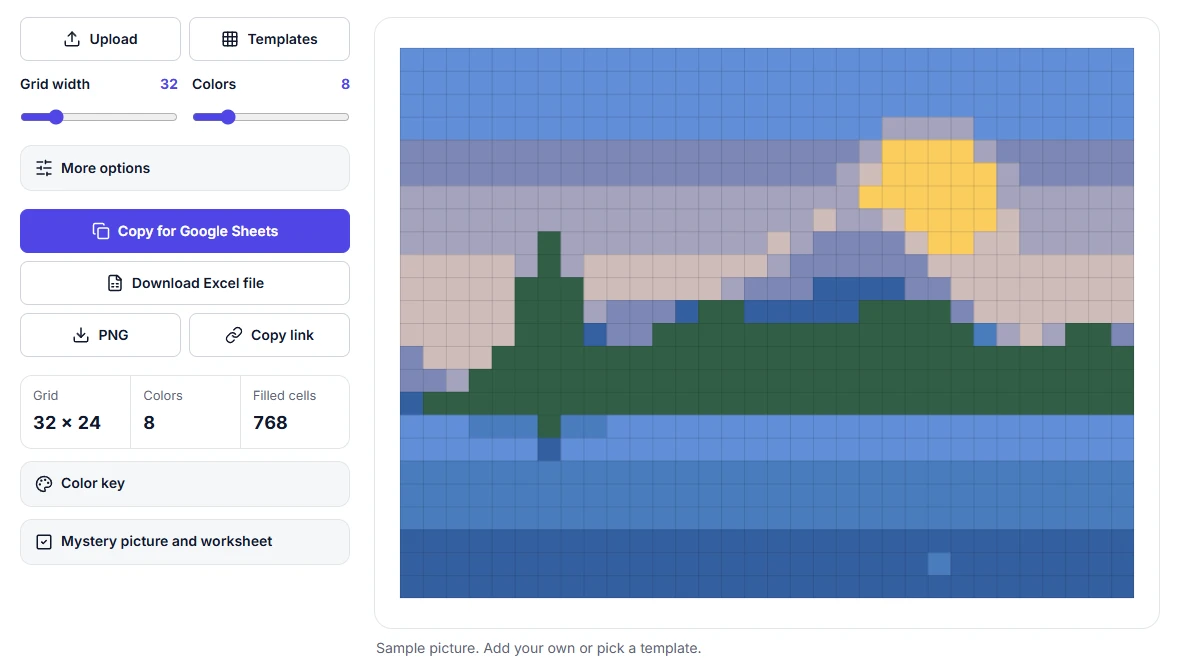
What is spreadsheet pixel art?
Spreadsheet pixel art is a picture made from the cells of a spreadsheet. Each cell is one pixel, filled with a solid color, and the columns are narrowed until every cell is a small square. Zoom out and the grid turns into an image. Teachers use it to practice formatting, coordinates and math; students and hobbyists like it because the result is clean and easy to share.
Making it by hand means resizing every column, then coloring hundreds or thousands of cells one at a time, or setting up number-to-color rules before you start. Some generators do not make real pixel art at all and split each pixel into separate red, green and blue stripes. This maker gives you true colored cells straight away: one click, square cells, and nothing to set up.

Excel pixel art and Google Sheets pixel art
For Google Sheets pixel art, copy and paste is the fastest way. Click Copy for Google Sheets, open a blank sheet (sheets.new), click cell A1 and paste. Then click the column letter A, scroll right, hold Shift and click the picture’s last column letter (AF for 32 cells wide), right-click a selected letter, choose Resize columns, type 21 and click OK. You can also upload the Excel file to Google Drive and open it with Google Sheets.
For Excel pixel art, download the file. The Pixel Art sheet has square cells and fits on one printed page. The Color Key sheet lists each color with its number, hex code and cell count. Select any cell to see its color number, stored in an invisible font.
Excel or Google Sheets? Step-by-step help for each: Excel pixel art in Excel desktop and Excel for the web, and Google Sheets pixel art with copy and paste or import.
Colored cells vs mystery reveal
Colored cells (the Pixel art mode) is the finished artwork: every cell already has its color, ready to show, share or print.
Mystery reveal (the Mystery mode) turns the same picture into an activity. The file opens with a blank Picture sheet and a Questions sheet with yellow answer cells. Each correct answer uncovers one color of the picture; a wrong answer turns light red and reveals nothing. Use math facts (addition, subtraction, multiplication, division or mixed, at three levels) or type your own questions for any subject. The tool counts how many rows you have filled and can fill the empty ones with math facts. Split into more parts gives up to 20 questions. The answer key and teacher notes are included, so there is nothing to set up.

The same file works in Google Sheets: upload it to Drive and open it with Google Sheets. The answers sit on a hidden sheet that anyone can unhide, so use mystery pictures for practice and fun rather than tests.
Starter templates and printable worksheets
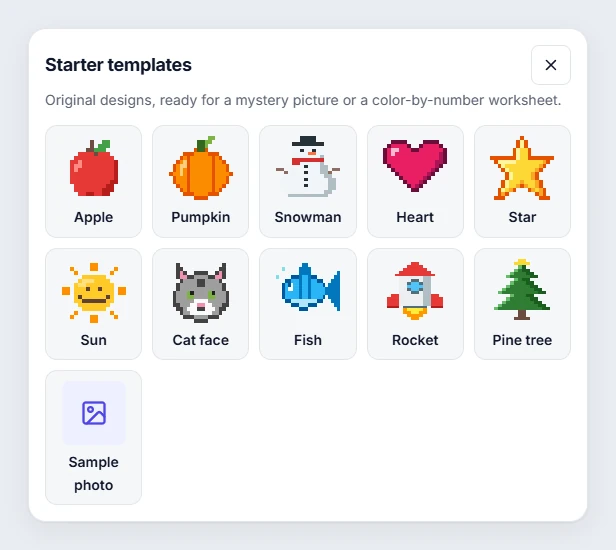
No picture handy? Click Templates and pick one of 10 original designs: apple, pumpkin, snowman, heart, star, sun, cat face, fish, rocket or pine tree. Each uses 4 to 8 colors, a good size for a mystery picture.
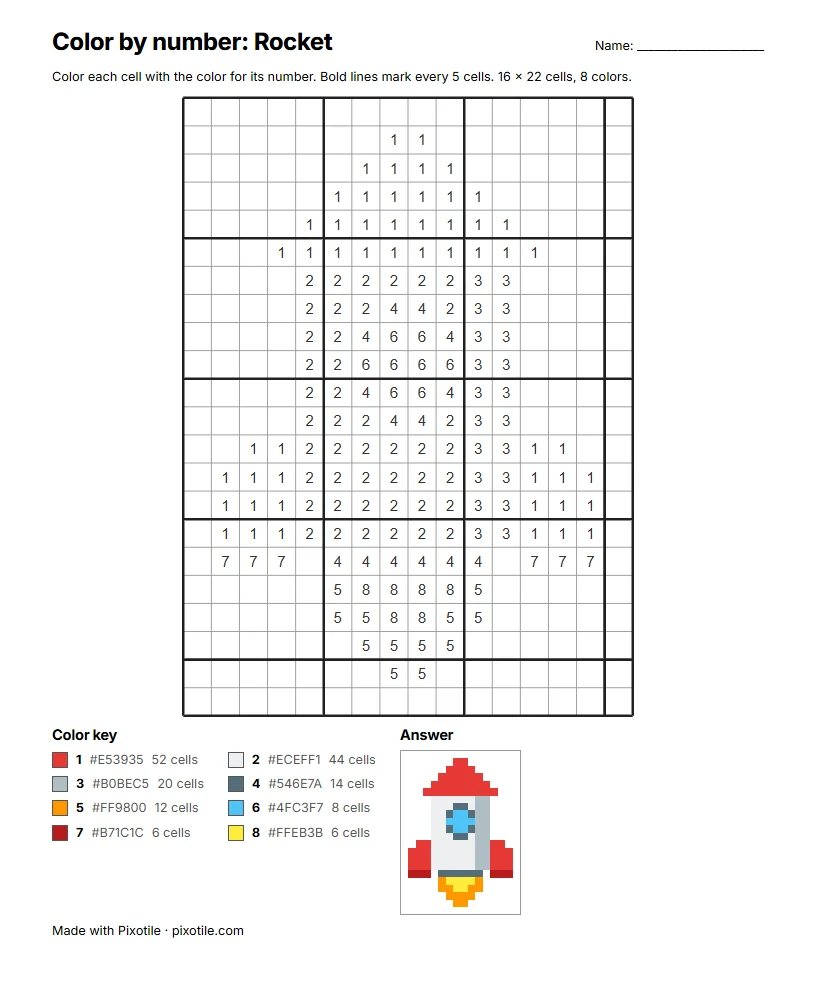
For a paper activity, choose Worksheet and click Print worksheet. You get a color-by-number sheet with the color number in every cell, a bold line every 5 cells, a color key and a small answer picture. To keep a PDF, set the print destination to Save as PDF; the file name is filled in for you. Grids up to 48 cells wide print best.
Getting a clean result
- Start with a simple picture. One clear subject on a plain background works best. Crop tightly, or use Square crop under More options.
- Pick the grid width for the job. 24 to 32 cells across suits icons and first activities, 48 to 64 suits faces and pets, and up to 128 makes a detailed poster.
- Use fewer colors than you think. 6 to 12 colors look bold and are quick to color by hand. Raise the count for photos with soft shading.
- Try dithering for photos. It mixes neighboring colors so skies and other gradients look smoother.
- Need the background empty? Use a PNG with a transparent background and tick Keep transparent areas empty, so those cells have no fill.
- Need standard colors? Choose the Classic Excel palette to use only colors from Excel's classic color set.
Classroom ideas
- Math facts practice: download a mystery picture with multiplication facts and let students work until the picture appears.
- Color by number: print the worksheet and let students color it with crayons or markers.
- Coordinates practice: ask students to name the cell (such as D7) where a color starts or ends.
- Fractions and percentages: the Color Key shows each color's cell count, so students can work out what fraction of the picture is sky.
- Spreadsheet skills: have students draw their own pixel art with the fill tool, then compare it with a version made here.
- Google Classroom: open the mystery file in Google Sheets, then assign it with Make a copy for each student. The file's Teacher Notes sheet lists the steps.